
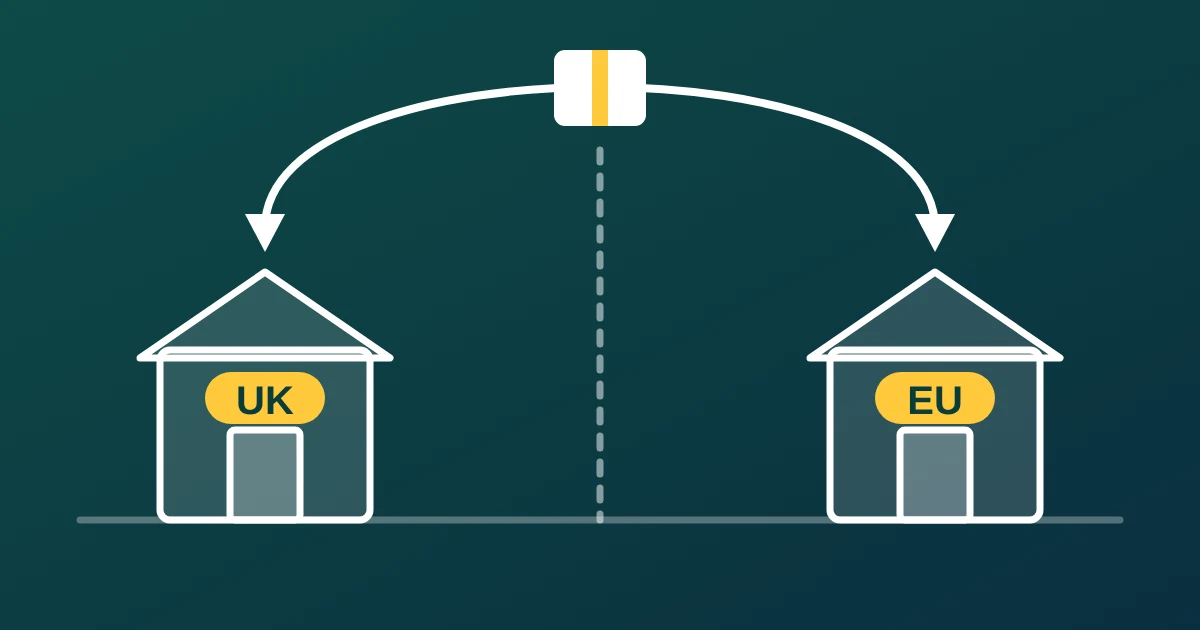
Returned Goods Relief (RGR) lets goods that were exported come back without paying import duty a second time. The UK and the EU apply the same idea with different details. This guide compares the two regimes for ecommerce returns: what qualifies, the time limit, how VAT works and what evidence to keep.
Key takeaways
- Both regimes give relief on goods that left and come back within three years of export.
- Goods must come back in the same state: not used, not tried and not worn.
- VAT is the main difference. In the UK, the person re-importing must be the person who exported. In the EU, each Member State sets its own procedure.
- Item-level evidence decides whether a claim works. Product identifiers help identify exactly which items are being returned.
Returned Goods Relief in one paragraph
RGR avoids paying duty twice on the same goods. When goods you exported return, the import can be relieved of duty if the conditions are met. It is applied when the goods are re-imported. That is different from duty drawback, which refunds duty that was paid on imported goods. Our guide to cross-border eCommerce returns shows how the two routes fit together.
UK vs EU at a glance
| UK | EU | |
|---|---|---|
| What qualifies | Goods exported or transported from the UK in free circulation | Union goods that were exported from the EU, including non-EU-origin goods that had been released for free circulation |
| Time limit | Re-imported within three years of export | Returned within three years of export |
| State of the goods | The same goods, not altered abroad. Worn or tried-on items are not eligible | Returned in the same state in which they were exported: not used, not tried, not worn |
| Customs duty relief | Yes, if the conditions are met | Yes, under Union Customs Code Article 203 |
| VAT | The person re-importing must be the person who exported the goods. VAT zero-rated on export is paid on return | Handled separately from duty. Each Member State sets its own procedure |
| Who requests it | Requested by the customs broker, with information showing the conditions are met | Requested by the customs broker, with information showing the conditions are met |
| Evidence | Export declaration, import records, invoices, transport documents, product identifiers | Export declaration, proof of export, proof the goods are unaltered, INF3 where the Member State requires it |
Which regime applies to your return?
The relief applies where the goods re-enter the territory they were exported from.
- A retailer ships goods from the UK to a customer in the EU, and the customer returns them to the UK: UK rules apply on re-import.
- A retailer exports Union goods from the EU to a customer in the UK, and the goods come back to the EU: EU rules apply on re-import.
Retailers with stock and customers on both sides should map each flow separately. The same product can fall under different rules depending on where it left from and where it returns.
UK rules in detail
What must be true
- The goods were exported or transported from the UK in free circulation.
- They are re-imported within three years of export.
- They come back as the same goods, without being altered abroad. Worn or tried-on items are not eligible.
VAT has its own condition. For VAT relief, the person re-importing the goods generally has to be the person who exported them, and any VAT that was zero-rated on export has to be paid on return. If the importer is not the exporter, or does not own the returning goods, import VAT is normally due. This is where marketplaces and 3PLs can cause problems: the party importing the return is not always the party that exported the goods.
Excise duty is not covered. Relief from excise duty is not available under Returned Goods Relief.
Evidence. Keep the original export declaration, import records, invoices, transport documents, product identifiers and records showing that the goods have not been materially changed. You need to show that the goods met the conditions at the time of export, and HMRC may ask for additional supporting documents.
If you already paid duty. The opportunity may not be lost. Repayment claims have a time limit: three years after the re-import. Keep your documentation and review it with a customs specialist. Our page on Returned Goods Relief in the UK explains how TDR handles these cases.
EU rules in detail
What must be true
- The goods were exported from the EU as Union goods.
- They are returned within three years of export.
- They are returned in the same state in which they were exported: not used, not tried and not worn.
- The relief is requested by the customs broker, with information showing the conditions are met.
- Part of an earlier export can qualify. The whole shipment does not have to return.
Union goods and origin. Goods of non-EU origin that are in free circulation in the EU can qualify. Union status is granted to goods that are made solely from Union goods, and evidence of Union status can strengthen your claim.
State of the goods. Whether a repair, repackaging or other treatment changes the state of the goods is assessed case by case by customs, so the specific facts matter. Goods that were repaired abroad generally do not qualify as returned goods. Article 158 of Delegated Regulation (EU) 2015/2446 sets out when goods are considered to be returned in the state in which they were exported.
VAT. VAT is a separate question. The EU VAT Directive exempts the re-importation, by the person who exported them, of goods in the state in which they were exported, where those goods are exempt from customs duty. The conditions and procedures are set by each Member State, so check the rules of the country where the goods come back.
Documents. Depending on the circumstances, supporting evidence can include the export declaration, proof of export such as invoices and transport documents, proof that the goods have not been altered, and a returned goods information sheet (INF3) where the Member State requires it. INF3 is commonly used and is issued by the competent authorities in the exporting Member State and stamped by customs. The exact documents depend on the country of re-import and on the origin and value of the goods.
Who proves it. The importer or declarant should be prepared to substantiate the claim to customs. Relief is not applied automatically: the importer must be able to show that the goods meet the requirements, or pay the applicable duty and VAT.
If you already paid duty. Repayment claims have time limits: three years after the initial exportation. Our page on Returned Goods Relief in the EU explains how TDR handles these cases.
What both regimes need in practice
Most claims succeed or fail on data, not on the rule itself.
- Item-level traceability. Returned items have to be matched to the original shipment. Common problems include data mismatches between export and import declarations (for example classifications or quantities), price differences between the export and the return, and claiming more goods than were exported. Our Ask the Experts interview on Returned Goods Relief covers these in detail.
- Product identifiers. They help identify exactly which items are being returned and provide a source for the refund. See what the EU product identifier requirement means for eCommerce brands.
- Condition checks at the warehouse. Because worn or tried-on goods are not eligible in either regime, record the condition of each returned item when it arrives.
- Importer and exporter. Check who exported the goods and who re-imports them, in the UK for VAT relief and in the EU under the rules of the Member State.
Returned Goods Relief or duty drawback?
They solve different problems. RGR gives relief on goods that were exported and come back. Duty drawback refunds duty paid on goods that were imported and later leave again. Many retailers have both flows. See our pages on UK duty refund and EU duty refund, and read how duty drawback refunds are calculated.
A five-step review of one return flow
- Pick one representative return flow and write down every border crossing.
- Identify where the goods were exported from and where they come back.
- Match sample returned items to their export declarations and logistics records.
- Record the condition of each item: used, tried, worn or unchanged.
- Check who exported and who re-imports the goods, and compare the dates with the three-year limit.
Frequently asked questions
How long do I have to return goods to claim Returned Goods Relief?
In both the UK and the EU, goods must come back within three years of export.
Are worn or tried-on items eligible?
No. Goods must come back in the same state: not used, not tried and not worn.
Does Returned Goods Relief cover VAT?
It depends on the regime. In the UK, VAT relief has its own conditions, including that the person re-importing is the person who exported. In the EU, VAT is handled separately and each Member State sets its own procedure.
Can goods of non-EU origin qualify in the EU?
Yes, if they are in free circulation in the EU and the other conditions are met.
What if I already paid duty on returned goods?
The opportunity may not be lost. Keep your export, import and product documentation and contact us. Time limits apply to repayment claims.
Next step
Trade Duty Refund offers Returned Goods Relief in the UK and in the EU, plus duty drawback in the US, EU and UK. Start with the UK questionnaire or the EU questionnaire, or get your free savings estimate.
Official guidance
- HMRC: Pay less import duty and VAT when re-importing goods to the UK and EU
- Union Customs Code (Regulation (EU) No 952/2013), Article 203
- Commission Delegated Regulation (EU) 2015/2446, Article 158
This guide is general information, not a determination that a particular return qualifies for relief. Confirm the current rules and the treatment of your customs flow with a qualified customs professional.
(Updated: )