
New Year…New Flyer
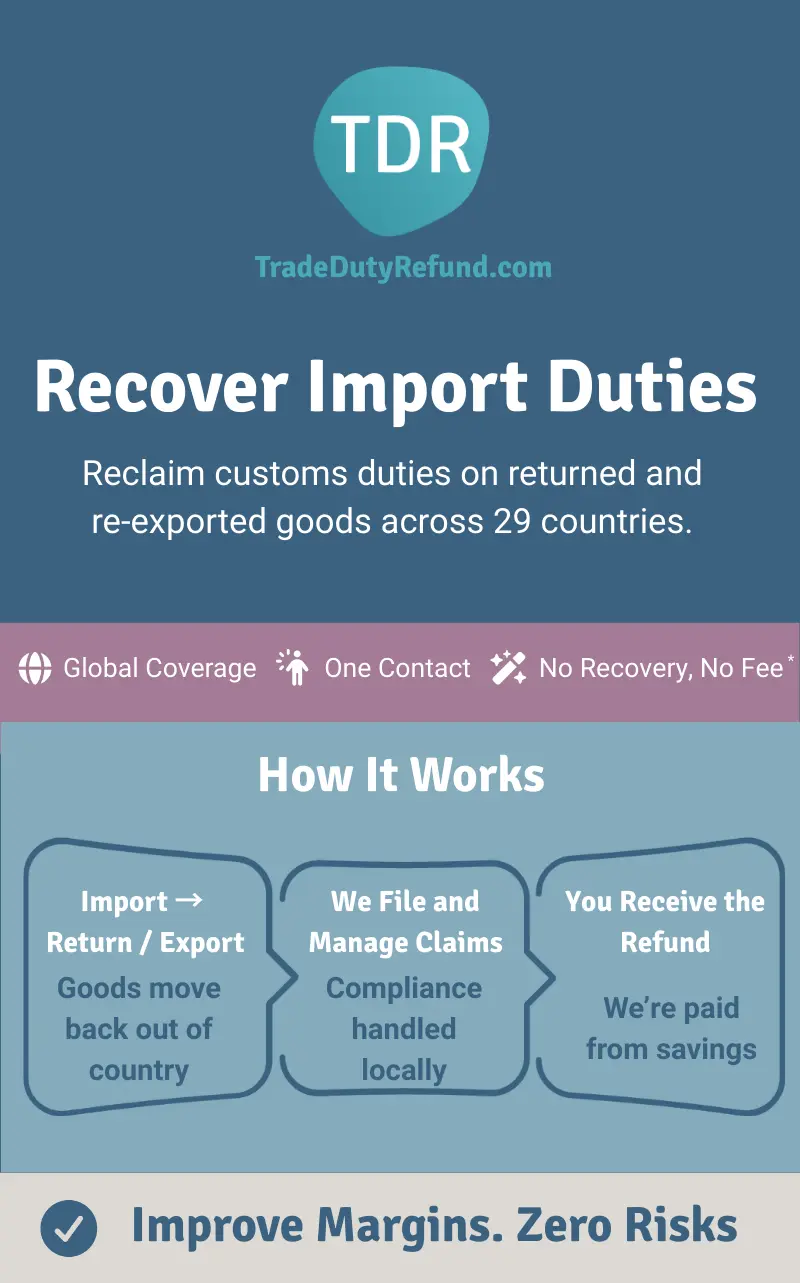
As eCommerce brands enter 2026, pressure on margins is higher than ever—yet most retailers still leave a surprising amount of money with Customs by not reclaiming duties on returned and re-exported goods. Trade Duty Refund’s new flyer showcases how a streamlined, multi-country duty recovery program can turn those forgotten costs into a reliable new profit lever.
Here’s to our new flyer!
Why TDR
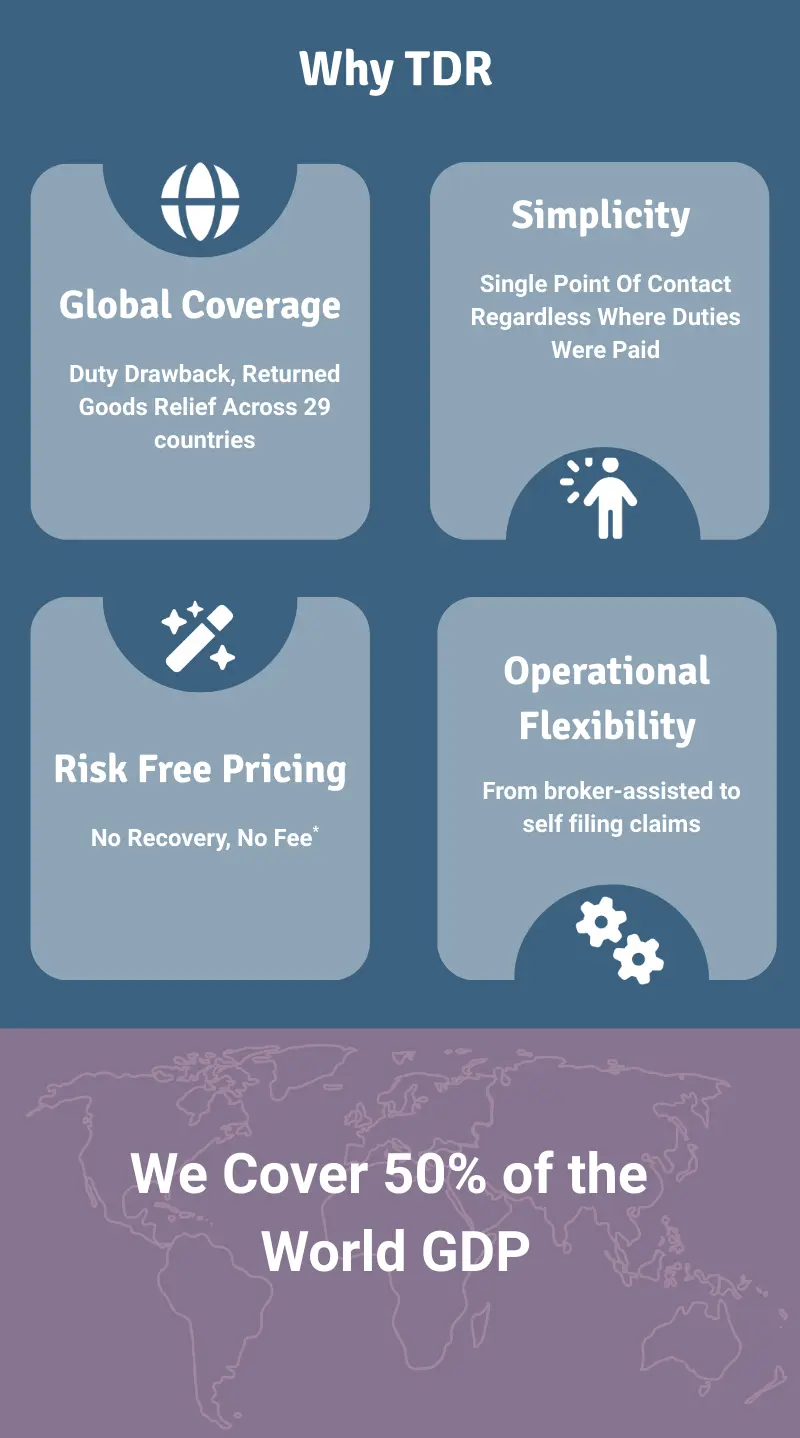
Trade Duty Refund (TDR) exists to make customs duty recovery predictable, repeatable and low effort for finance and supply chain leaders who are already stretched thin managing cross‑border growth. The new flyer distills this promise into four core benefits that underpin every engagement: global coverage, simplicity, risk‑free pricing and operational flexibility.
At a glance, the flyer highlights that TDR supports duty drawback and returned goods relief programs across 29 countries, covering around half of global GDP. For brands that already ship to multiple markets—or plan to expand internationally—this reach means you can build one coherent recovery strategy instead of managing a patchwork of local solutions.
Global coverage
The first panel of the flyer focuses on Global Coverage, emphasizing that TDR handles duty drawback and returned goods relief in 29 countries, including key destinations such as the US, UK and EU markets. This allows retailers to harmonize their approach to duty refunds where they pay the most duties and see the highest volume of returns.
From a finance perspective, this reach matters for two reasons. First, it concentrates recovery impact where duties and VAT are highest, creating meaningful P\&L improvements from a single program. Second, working with one partner across markets simplifies forecasting and reporting, since savings data can be consolidated and aligned with internal performance metrics.
Simplicity
The second panel stresses Simplicity, with TDR acting as a single point of contact regardless of where duties were originally paid. Instead of coordinating with multiple brokers, local advisors and internal teams, brands can channel their duty recovery efforts through one relationship.
Operationally, this means fewer hand‑offs, fewer emails and fewer opportunities for compliance gaps. It also makes it easier for CFOs and controllers to sponsor a recovery program because they can assign one owner, define one governance framework and receive one consolidated view of results across all participating countries.
Risk‑free pricing
Another important message from the flyer is Risk Free Pricing: “No Recovery, No Fee.” This aligns the economics of the engagement with the financial priorities of budget‑conscious organizations. You do not commit capital up front, and TDR is compensated from the savings generated.
For finance leaders, contingent pricing helps de‑risk internal approval. It converts what might otherwise feel like a discretionary consultancy spend into a performance‑based initiative directly tied to realized refunds.
This contingent driven pricing applies to the US and UK markets.
Operational flexibility
The fourth pillar is Operational Flexibility. The flyer explains that TDR supports models ranging from broker‑assisted programs, where TDR’s network and processes do more of the heavy lifting, to self‑filing arrangements where your in‑house team wants to run day‑to‑day claims with expert guidance and automation.
This flexibility allows retailers to start where they are. If you already have a trusted customs broker or internal customs team, TDR can design a framework and tooling that leverages those relationships instead of replacing them. If you have limited internal resources, TDR can act as an extension of your team, taking on claim preparation, documentation and liaison with local authorities.
Self filing solution applies to the US market.
Common use cases
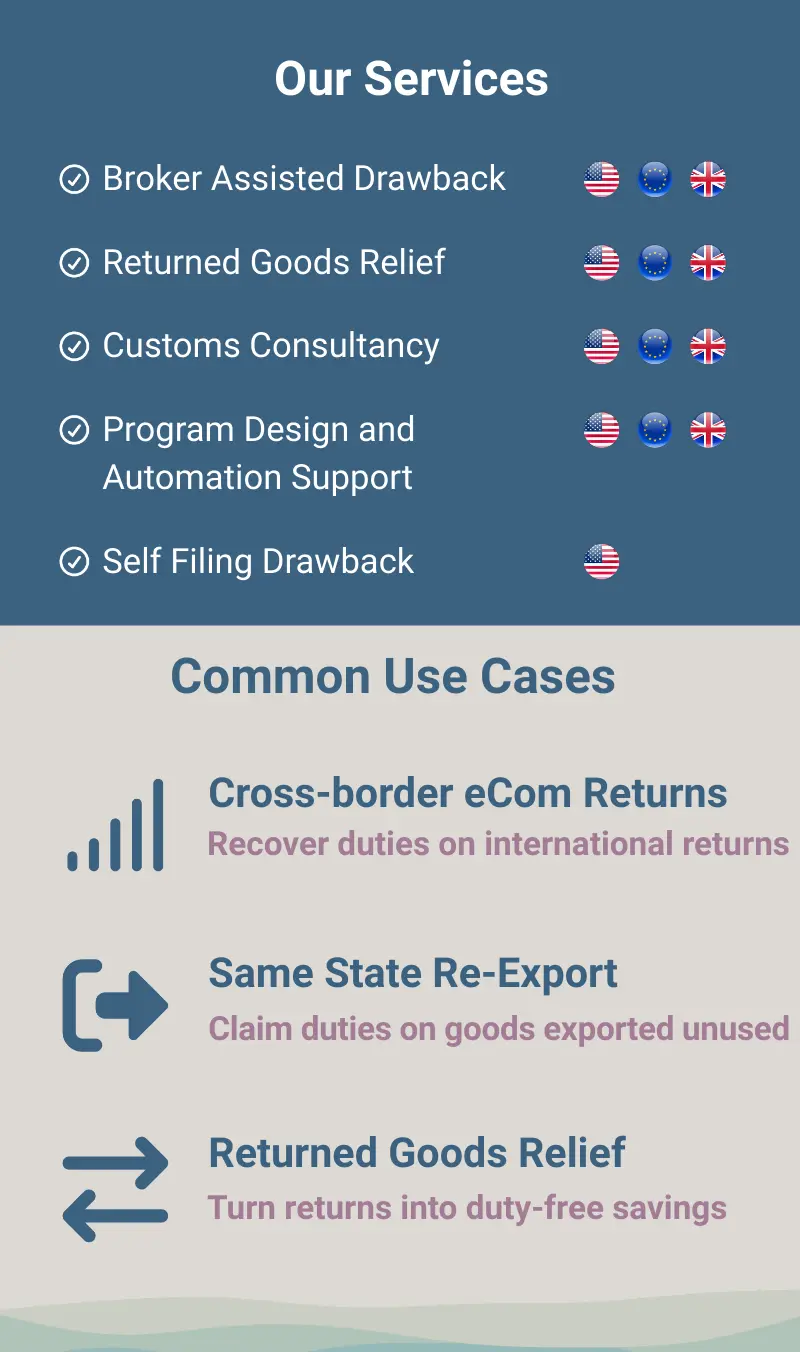
The second flyer page moves from value pillars to concrete scenarios where duty recovery delivers immediate impact. These use cases will feel familiar to any brand running cross‑border eCommerce operations.
The headline use case is cross‑border eCom returns—recovering duties on international returns. When a shipped order comes back into your warehouse or returns hub, you often end up writing off the import duties and taxes, even though those goods are no longer consumed in the destination country. TDR helps structure the data, evidence and filing process to reclaim those amounts.
A second use case is same‑state re‑export: claiming duties on goods that were imported but then exported unused. This is especially relevant for inventory that moves between regional hubs, wholesale channels or marketplaces, where stock may transit countries but never actually enter into commerce there.
Finally, the flyer reiterates traditional returned goods relief, turning returns into duty‑free savings by leveraging mechanisms already available in customs law but underused in daily operations.
TDR services
To support these scenarios, the flyer summarizes TDR’s core service lines. Broker‑assisted drawback gives you access to experienced specialists and established workflows for US, UK and EU claims, without needing to build in‑house expertise from scratch.
Complementing this are customs consultancy and program design services that ensure your processes, documentation and data flows are aligned to regulatory requirements in each market. Automation support helps connect your eCommerce platforms, WMS, ERP and broker data so that duty recovery becomes a routine part of your returns and export flows rather than a manual, ad‑hoc task.
How it works
One of the most practical sections of the flyer is the “How It Works” visual, which breaks the recovery journey into three intuitive steps: Import → Return/Export, TDR files and manages claims, and you receive the refund. For internal stakeholders, this framing clarifies that duty recovery fits into existing product flows, rather than requiring a new logistical model.
The flyer emphasizes that compliance is handled locally while you are paid from savings. TDR operates within the rules and documentation standards of each customs authority, while you benefit from a simplified, outcome‑oriented relationship that ties compensation to successful claims.
Results you can expect
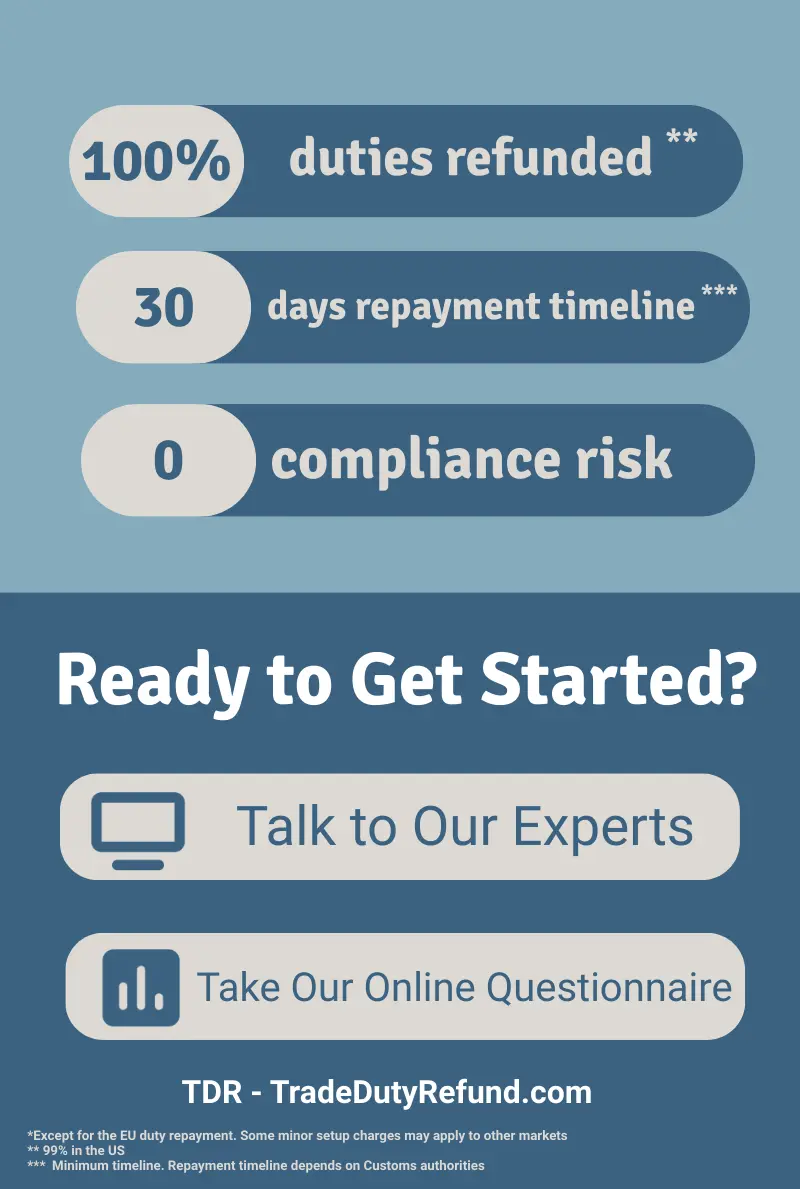
The final flyer page translates the model into expected results, using clear, numeric statements. It highlights that duties can be refunded in full in eligible scenarios, with repayment timelines starting from as little as 30 days depending on local customs processes.
Equally important, the flyer underscores that the program is designed to introduce zero additional compliance risk when implemented correctly. In practice, that means building the program on existing legal frameworks, maintaining robust documentation and aligning with your internal audit and governance standards.
How to get started
The flyer closes with two straightforward calls to action, designed for different styles of decision‑making. If you prefer to start with data, you can complete an online assessment for US, UK and EU duty repayment. This helps size the potential opportunity before committing resources.
If you would rather explore the operational and compliance angle first, you can book a conversation with one of TDR’s experts. In both cases, the objective is to quickly determine whether your return flows and export patterns justify a structured duty recovery program in 2026.