
10 Must-Know About eCom EU Handling Fees in 2026
If you’re importing e-commerce orders to Italy and Romania in 2026, there’s a new cost hitting your bottom line—and it’s not a standard import duty. Starting January 1st, Italy implemented a €2 handling fee and Romania a 25 lei fee on every imported e-commerce package. These charges represent a significant shift in how the EU manages cross-border digital commerce, and understanding them is essential for protecting your margins.
Where Are These Fees Being Implemented?
As of January 1st, 2026, two EU member states have activated handling fees on incoming e-commerce orders: Italy and Romania. This is a critical development for retailers shipping internationally into the EU.
Several other member states are in evaluation phases. The Benelux countries (Belgium, Netherlands, Luxembourg) and France have publicly indicated they are considering implementing similar fees, but as of now, they have not activated them. This creates an uneven customs landscape across the EU that e-commerce operators must navigate carefully.
Understanding the Cost: How Much Will This Impact You?
The fee structure is straightforward but consequential:
- Italy: €2 per imported e-commerce package
- Romania: 25 lei per imported e-commerce package (approximately €3.35)
For a business shipping 1,000 orders monthly to Italy, this translates to an additional €2,000 in monthly costs—€24,000 annually. For larger e-commerce operations, the impact scales proportionally. When you consider typical e-commerce margins in fashion, beauty, and electronics (often 20-40%), these fees can consume 2-10% of gross profit on affected shipments.
The real challenge is predictability. Unlike traditional import duties, these handling fees are new, fragmented, and potentially subject to change as EU customs reform continues to evolve.
How Is the Handling Fee Calculated?
The handling fee applies on a per-package basis, not per line item, not per weight, not per value. These fees are applied to e-commerce orders imported and cleared under the H7 reduced dataset, which is the EU’s standard customs procedure for low-value e-commerce goods. H7 was designed to streamline customs clearance for small packages under a certain value threshold, but now it also triggers these handling fees in Italy and Romania.
This means whether you’re shipping a €5 item or a €500 item, the handling fee is fixed per package. The implication: lower-value items face proportionally higher fee impacts. A €5 item with a €2 handling fee faces a 40% cost increase before any other duties or taxes.
Who Collects These Fees?
This is where the situation becomes more complex. These handling fees are not new import duties imposed by the European Commission. If they were, they would apply uniformly across all EU member states by EU law.
Instead, these are national administrative charges decided independently by Italy and Romania. Under EU law, member states retain the right to charge fees for customs administrative services, essentially the cost of processing and clearing imports. This is what Italy and Romania have exercised.
Because they are national administrative charges rather than harmonized import duties, each member state can implement them independently, which explains the fragmented approach. The European Commission has not mandated a Europe-wide handling fee; instead, individual nations are deciding whether and how to implement them.
A Critical Clarification: Destination Doesn’t Matter
Here’s an important point that be confusing to many e-commerce operators: If your order is customs-cleared in Italy or Romania, you pay the handling fee, regardless of where the goods are ultimately delivered.
This means a package cleared through Italian customs but delivered to a customer in Germany still incurs the Italian handling fee. The fee is based on where customs clearance occurs, not the final destination. For businesses using distribution centers or 3PL partners in these countries, this becomes a critical operational consideration.
Will the EU Implement a Handling Fee Eventually?
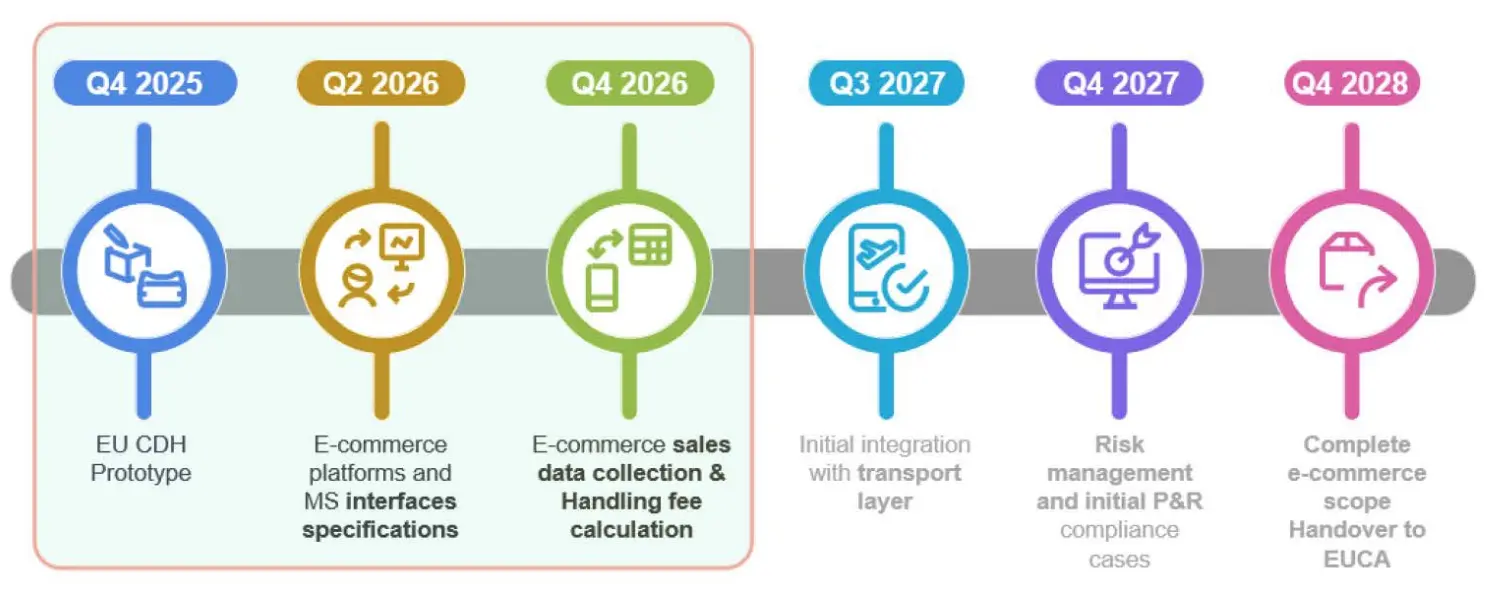
Yes, it’s on the roadmap. The EU initiated comprehensive customs reform in 2023, and handling fees are part of this modernization strategy. However, there is no fixed implementation date yet.
The next milestone is Q3 2026, when the European Commission is scheduled to release its calculation methodology for a potential EU-wide handling fee. This could eventually create a harmonized approach across all member states, but it remains in the planning phase.
The July 2026 Import Duty Question
E-commerce operators are also preparing for another significant change: the European Commission is implementing a €3 per line item import duty on low-value e-commerce goods starting in July 2026. This is separate from the Italian and Romanian handling fees.
Will the new July duty replace the Italian and Romanian fees? Not automatically. This decision rests with Italy and Romania. If they choose to keep their handling fees active, businesses will face both charges:
- The Italian/Romanian handling fee (per package)
- The new EU-wide import duty (€3 per line item)
This cumulative approach would create additional cost pressure, particularly for multi-item orders. At present, nothing has been officially announced about whether these nations will suspend their fees in favor of the new EU-wide duty.
How Can You Mitigate These Handling Fees?
The mitigation strategy is geographic:
Orders imported and cleared in Italy or Romania: These will incur the handling fee. There is no current exemption or deduction mechanism.
Orders imported and cleared in other EU member states: No additional handling fee applies. This has prompted some businesses to evaluate alternative import routes—potentially clearing goods through France, the Benelux countries, or other EU hubs before distributing to final destinations.
However, route optimization isn’t a complete solution for all businesses. Geographic proximity, logistics partnerships, and overall supply chain efficiency must be weighed against handling fee avoidance. For some operators, the total cost of alternative routing may exceed the cost of the handling fees themselves.
How Trade Duty Refund Can Help You Optimize Your EU Strategy
While handling fees are challenging, there’s an important complementary opportunity: duty recovery on returned goods.
Trade Duty Refund has developed a proprietary process to claim import duties on your behalf in the EU. Specifically, if you’re importing e-commerce goods into the EU and those goods are later returned by customers and re-exported, you can recover the import duties paid on those returned items.
This creates a meaningful cost offset. As an e-commerce business, you already know your return rates. By systematically reclaiming import duties on returns, you create a financial recovery stream that reduces the net impact of both handling fees and import duties.
For example, if you import 10,000 e-commerce packages monthly into the EU and experience a 20% return rate (a realistic figure for fashion and electronics), you have 2,000 packages’ worth of import duties eligible for recovery each month. Over a year, this represents substantial refundable amounts that most e-commerce operators are currently leaving on the table.
The question isn’t just how to minimize new costs like handling fees—it’s how to recover duties you’re already paying on a portion of your imports.
Looking Ahead: The New EU Customs Reality
The EU’s customs environment for e-commerce is rapidly evolving. Handling fees, new import duties, and ongoing customs reform create both challenges and opportunities. The retailers and brands that will thrive in 2026 are those that:
- Understand the cost structure of different import routes into the EU
- Plan strategically for the July 2026 import duty implementation
- Recover duties systematically on returned goods through processes like those offered by Trade Duty Refund
Your margins depend on it. The €2 Italian fee and 25 lei Romanian fee are just the beginning of a broader customs landscape shift. Act now to optimize your EU e-commerce operations.
Trade Duty Refund specializes in customs duty reclamation for international e-commerce and import/export businesses. Whether you’re managing new handling fees, preparing for the July import duty, or recovering duties on returns, we have the expertise and processes to help. Contact our team to discuss your EU e-commerce strategy.